Country Guitar Soloing Concepts
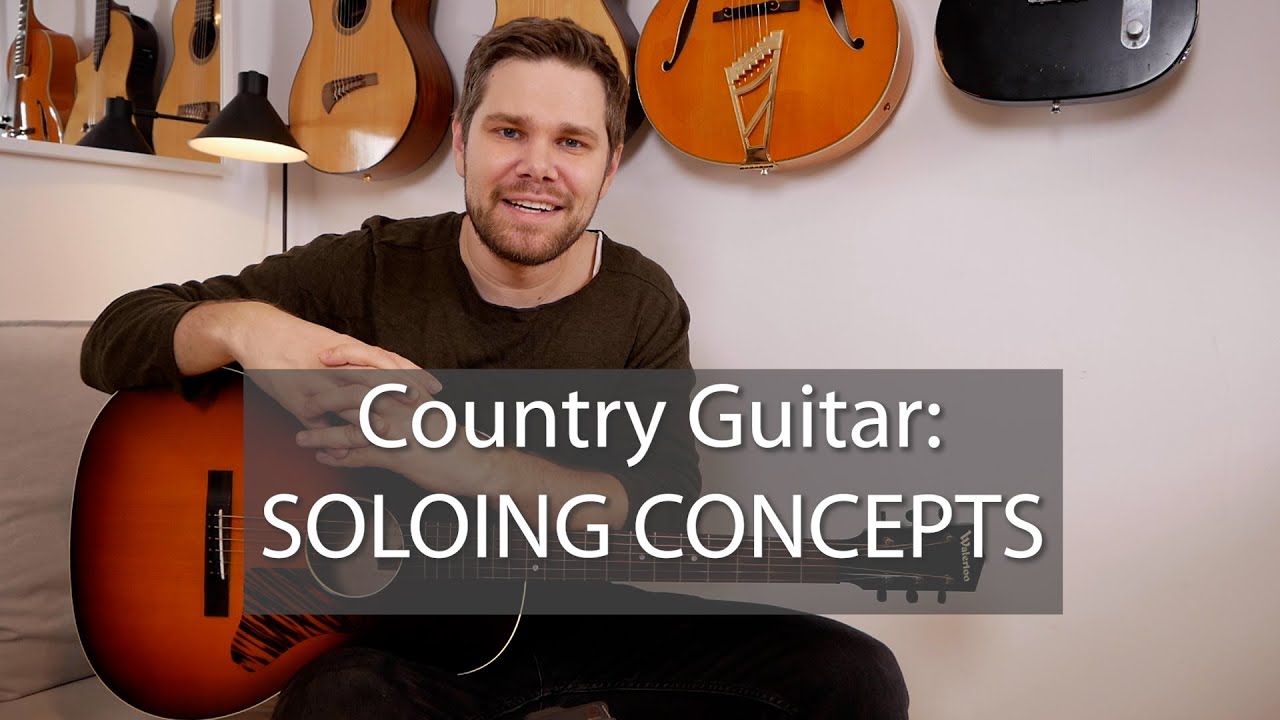
That was the preview
Watch the full lesson with tabs and backing tracks.
About This Lesson
In this lesson, we're focusing on different concepts that will help us become better improvisers in this style. We're learning how to really use the scales, modes and arpeggios over classic country changes.
More about the lesson:
How to use the pentatonic scales over each chord
How to use the mixolydian mode over each chord
How to use chromatics in your solos
Open string lick ideas
Ready to become a better improviser? Watch this fun lesson today!
82 minute video lesson
11 page curriculum with detailed TABs and notation
Great sounding backing tracks for your practice session
Let's count in! 1, 2, 3, 4...
then $19.95/month after 5 days
Unlimited access to all lessons, tabs & backing tracks
$0 today · $19.95/month after 5 days · Cancel anytime
Already have access?
85 students have opened this lesson
Your Instructor

Emil Ernebro
Fingerstyle, Solo Acoustic Guitar & Arranging
Awarded "Outstanding Player" at Musicians Institute (Hollywood), winner of "Young Talents" at Uppsala International Guitar Festival, recipient of the "Guitar Peoples Prize" and "Hagström Guitar Scholarship." With over 200k Instagram followers and 90k YouTube subscribers, Emil performs ~100 concerts/year, records award-winning albums, and teaches fingerstyle guitar through ProGuitar lessons.
View ProfileWhat Guitarists Are Saying
“Such an unbeatable joy to have found ProGuitar! That might sound excessive but I assure you that it is not. Emil's music contributes to a seemingly insatiable appetite to develop musically & the ProGuitar lessons are the best I have found so far.”

“Just one lesson from ProGuitar honestly made my soloing skills increase by 400%. This is a densely compact treasure trove of pure guitar love and knowledge.”

Ready to Level Up?
Get instant access to this lesson and 346+ more with ProGuitar
Already a member?
$0 today · 30-day money-back guarantee · Cancel anytime
Questions & Answers
85 students have opened this lesson
Hi Emil, thanks for the nice lesson! As country music is also full of minor chords, I would like to ask what scales one can use over them. Just e.g. A minor pentatonic scale over A minor? I tried that and it works. But are there some other possibilities? Thanks a lot! Bests, Rostislav
1 reply
@Rostislav Hi there! Thanks for the question! The first thing you need to ask yourself when playing over a new song is "What key is this song in?". When you've figured that out, you can use the pentatonic scale of that key. For instance, if the song is in A minor, you can use the A minor pentatonic scale (which is the same as C major pentatonic, since A minor is the relative minor for C major). I think what you're really asking about though, is if you can use different minor pentatonic scales over each chord, much like we talked about in the lesson (but we talked about major pentatonic scales). And the answer is Yes you can! For instance.. if you play over a song in C major, and the chord E minor shows up, you can definitely use the E minor pentatonic over that chord. This will outline the changes even more than using the C major pentatonic (or A minor, ,same thing).. And if a D minor chord shows up, you can use the D minor pentatonic, and if a A minor chord shows up you can obviously use the A minor pentatonic. So rather than just using the C major pentatonic (or A minor pentatonic, same notes) over a song in C major or A minor - try using the pentatonic scale from the root of the chord you're playing over. This is a concept that works and will outline the changes more. Note: All the notes of Am pentatonic, Em pentatonic, Dm pentatonic is actually within the key of the C major scale, (or A minor scale). So you'll never get outside of the key, you'll just outline each chord more playing this way. It's a cool concept! Another thing that I like to use to get another flavour is for instance, if you're playing over an A minor chord (and we're in the key of A minor), try using a minor pentatonic scale up a 5th from the chord you're playing over. So over Am, that would be a E minor pentatonic scale. This gives you some other flavours and sounds! It will give you an Am11 sound... And it's really nice to hear that 9 (B note) over that chord! Try it out! Have a wonderful day! Kind regards/Emil
I've been looking at the mixolydian scales for Country Guitar Soloing Concepts. Confused? I am! The shapes seem relate to other modes ie. diagram 3 = Aeolian --- diagram 4 = Locrian etc. Any clarification would be most appreciated. Thanks
1 reply
@Steviep2001 Hi there! Happy to hear that you're working on the Soloing Concepts lesson! :) Yes, I can see why this might be a bit confusing. Maybe you already know how the modes work, but just in case you're not familiar with this subject; The modes within the major scale are these: Ionian (that's the major scale) Dorian Phrygian Lydian Mixolydian Aeolian Locrian In other words, if you're playing in the key of C major for instance, the notes are: C D E F G A B and back to C Playing these notes from C to C creates a major scale (Ionian mode). , but if you play the same notes, starting on the note D. D E F G A B C ,.. you get the D dorian mode (which is a minor "scale". E to E within the C major scale would be the phrygian mode etc etc.. so all these modes contains the same notes. C Ionian mode (same as C major scale): C D E F G A B D dorian: D E F G A B C E phrygian E F G A B C D F lydian F G A B C D E G mixolydian G A B C D E F A aeolian A B C D E F G B locrian B C D E F G A Now to your question... When you look at those diagrams that you're referring to, you can see that one of the tones are white, and that note represents the root of that mixolydian mode. In other words, if you start on that note, you'll hear that it's the correct mode.. the A mixolydian mode. I've just notated the mode to the lowest note in that particular position of the guitar, so that you can learn the mode all the way from the lowest string to the highest string. If you're starting on the lowest string (like it shows in the TAB/notation) it will create the sound of the different modes depending on which diagram you're playing. I should've made a circe around the root note both in the TAB and notation that indicates that that note is the root. I shall modify this TAB to make this more clear. Thanks so much for pointing this out. So just make sure you start and end on an A note when you're playing those positions of the A mixolydian mode. Let me know if you have any questions or if this message was a bit too confusing. Kind regards/E
Ask Emil directly
Members post questions under the video and Emil answers personally.
Start 5-Day Free Trial